
Silage Corn vs. Sweet Corn: How We Grow Corn in Hiko, Nevada
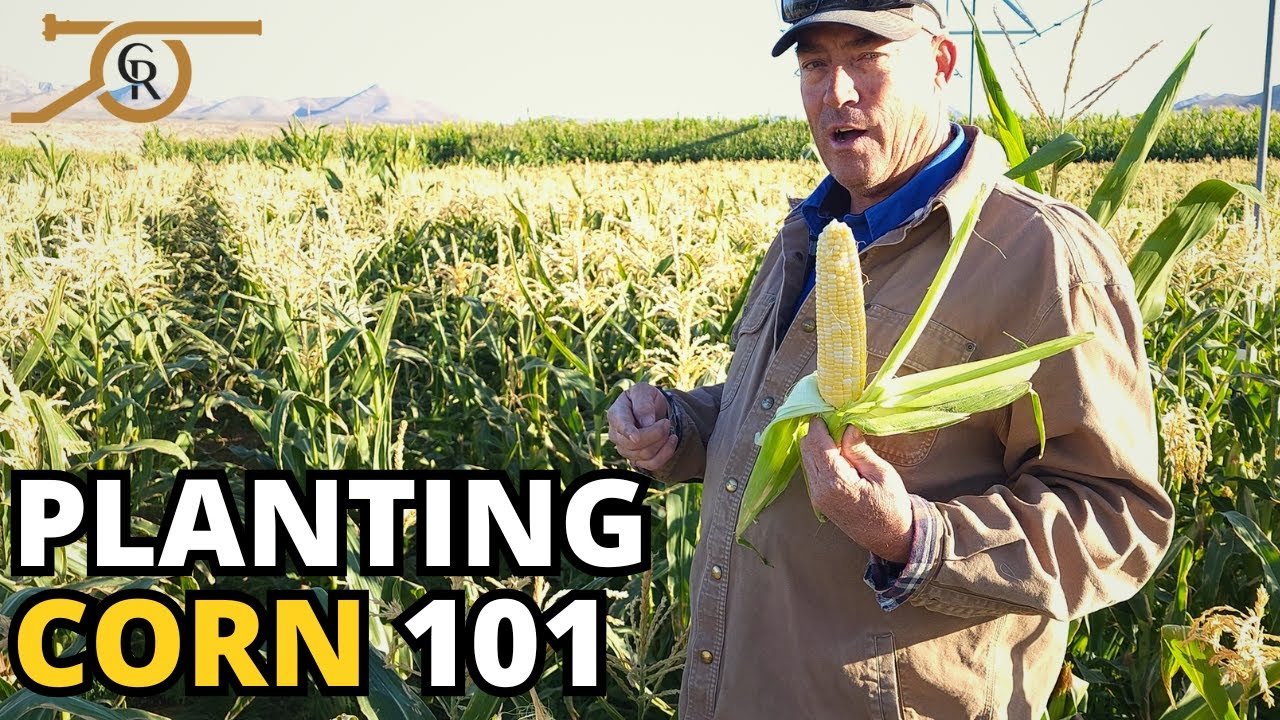
Out in our sweet corn patch in Hiko, with the pivot overhead and the mountains behind it, there's a clear line where the short sweet corn tassels stop and the field corn shoots up behind them (0:08). The two crops share a pivot and a planting day, but that's about all they have in common. The sweet corn gets picked by hand and ends up on someone's dinner table. The field corn gets chopped whole in the fall and fed to our cattle as silage.
In this video, Paul walks the field and gets into seed genetics, why so many gardens in the valley struggle with sweet corn, and how being the last stop for the harvest crew ends up working in our favor.
Quick takeaways
About two acres in the inner span of the pivot go to sweet corn, with field corn planted around it (0:20).
Our silage corn is chosen for tonnage: a big plant with lots of leaf and stalk, plus a good ear to add grain to the silage (2:01).
We plant around June 15 instead of late April or early May, so the corn pollinates after the hottest weeks of summer (7:51).
The sweet corn is about a 65-day corn and the silage corn is about 103-day, so we can plant them the same day without cross-pollination (10:17).
Two crops on one pivot
Most years we plant the inner span of the pivot to sweet corn. It's about two acres, a manageable piece that gets watered right along with the field corn around it.
This year the sweet corn had a weed problem, mostly pigweed and redroot coming up through the patch (0:31). Field corn doesn't give weeds much of a chance. It's an aggressive, fast-growing plant, and once it gets past its first few weeks, it canopies over and shades out everything underneath. Sweet corn goes in at about half the seed rate and never gets as big, so sunlight keeps reaching the ground and the weeds make the most of it (1:03). If you look closely, there are even a few field corn tassels poking up out of the sweet corn. Paul cleaned out the planter before switching seed, and a few still got through somehow.
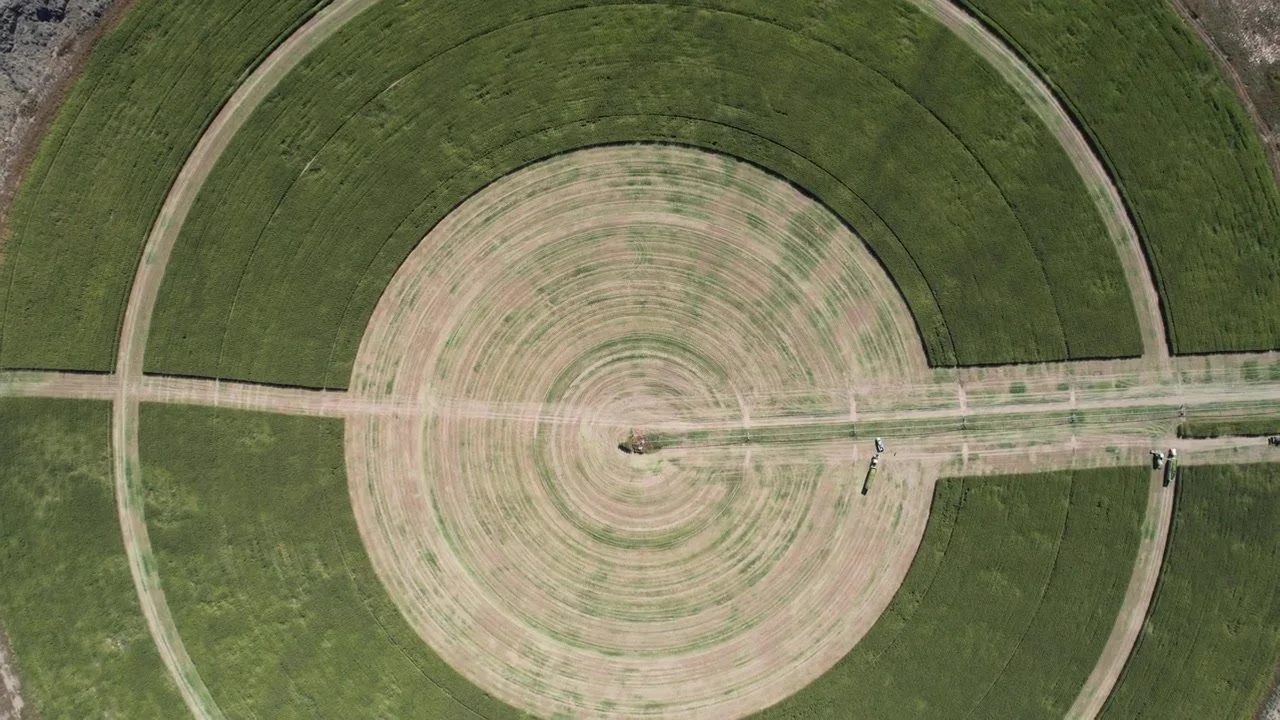
One of our center-pivot fields from above. Watch this moment (0:20)
Choosing seed
Even the field corn is a mix. On one side of the field road is a Pioneer variety, and on the other a taller Croplan variety is shooting up past it. "Basically in corn, you can genetically pick what you're trying to do," Paul says (1:41). For the sweet corn, that means seed selected to be sweet and bug-free. The plants stay short, but the ears are full and sweet.
The silage corn is picked for size. We want a tall plant with plenty of leaf and stalk, carrying a good ear that adds grain to the silage (2:01). Silage is the whole plant, chopped and packed away as cattle feed, so the bigger the plant, the more feed we get off every acre. Midwest grain farmers want the opposite. They run a combine through the field for the ear alone and don't care how big the stalk gets, so they plant shorter corn that puts everything into the grain (2:19).
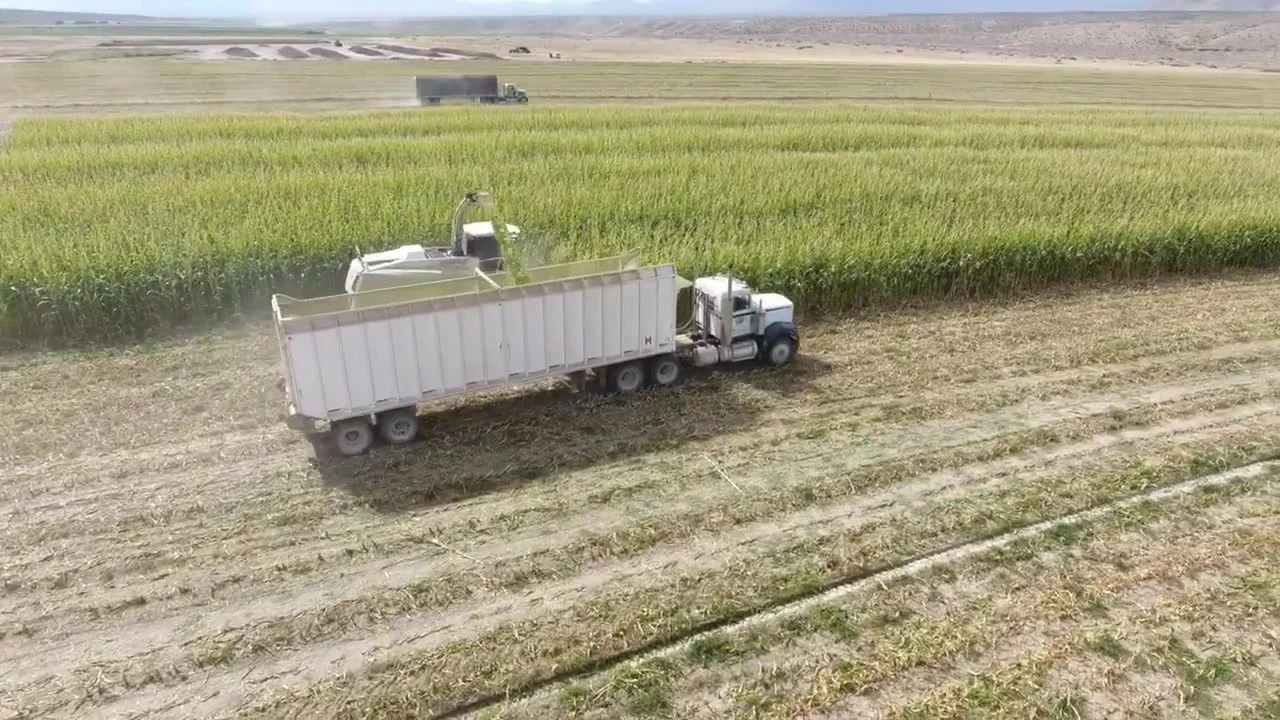
Chopping corn for silage. The whole plant goes into the truck. Watch this moment (2:06)
Our ground has a say in all this too. The soil in Hiko is rough, so we look for salt-tolerant varieties that can handle it. Paul studies the seed trials and picks for our climate, our heat and our soil, and he's upfront about what happens when he misses: "If we don't get that good of a match, it shows" (3:36). That's why we usually plant a few field corn varieties and compare them on yield, dry down (how quickly the corn loses moisture as it matures), protein, energy and digestibility (3:42).
Growing good sweet corn
By the day we filmed, we'd been picking sweet corn for about two weeks, and the first ears were starting to get past their prime. A good ear, the way Paul sees it, has no worms, looks good when you pull back the husk, and is the right size for a plate, not too big and not too small (4:16).
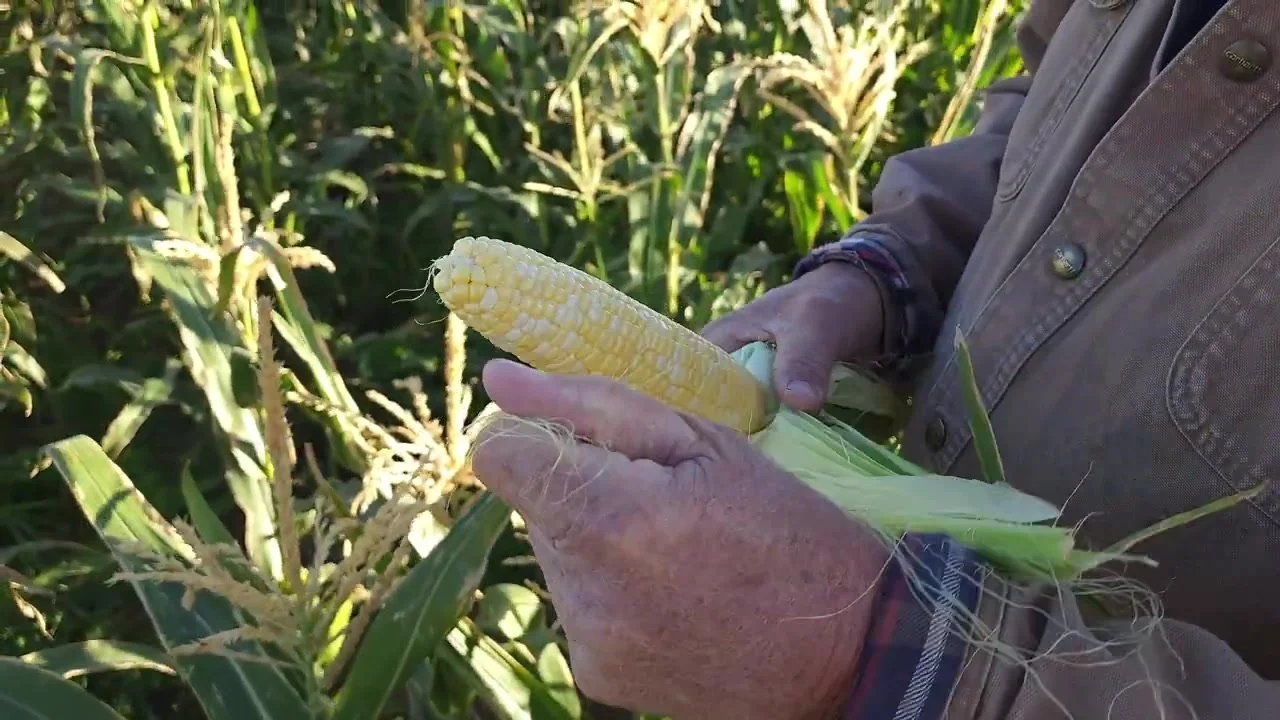
Most plants also carry a second ear that pollinated later and is still catching up. Paul calls them "seconds." They came in handy recently when a man called to ask if we'd still have corn when he passed through in about 10 days. The first ears would be too old by then, but there would be seconds to pick for him. Around the same point in the video there's a shot of a flatbed loaded with picked ears and a dog standing right in the middle of them (4:54).
Spacing matters too. Give each plant enough water, nutrition and sunlight and it has a better chance of filling out two good ears. In parts of the field Paul has been picking two full-sized ears off every plant down the row. Crowding more plants onto an acre can backfire, because you might get the same number of ears, just one per plant instead of two (5:47). This year's variety also grew shorter than usual. Short corn can point to a nutrient problem, but that wasn't the case here. The ears still came out a good size and well filled (5:57).
Dealing with the summer heat
Plenty of people in the valley have told Paul about sweet corn that didn't turn out. He can't speak to how they water, but he knows what summer is like here. From June 20 to August 1 it's around 105 degrees every day, and the wind blows (6:45). When corn tries to pollinate in that heat, a lot of the kernels never get pollinated, and you end up with cobs that have sparse, patchy rows.
The reason is in the silk. Every strand on the ear runs to a single kernel, and the pollen that falls from the tassel travels down it "like a little straw." If the silk dries out in the heat before the pollen makes it down, that kernel never forms (7:34).
Why we plant in June
So we wait. A lot of gardeners in the valley plant as early as they can, around April 25 or May 1. Our corn went in around June 15, which pushes pollination back into later August (8:02). By then the worst of the heat has broken, the days are milder, and the monsoon season can bring a little humidity with it, which seems to help with pollination.
Planting late pays off again at harvest. We have custom choppers come cut our silage, and being out in the middle of nowhere puts us at the bottom of their list. They work their way through Utah and across from Panaca, and when they finish, Paul says, it's "oh, we can come to Hiko now, we got nothing else to do" (8:41). That usually gets them here around October 15.
The weather backs us up. Utah tends to get a frost around September 21, and growers there have to hurry to get their corn chopped. In Hiko, frost often holds off until Halloween or even the middle of November (8:46). So by the time the crew rolls in from Utah, where they've often been chopping frozen corn, ours is usually still green and growing.
The trick is keeping the corn at the right moisture until they get here. If it's planted too early, the corn ripens ahead of the choppers, the leaves turn yellow, it dries down on its own, and silage quality "really goes downhill" (9:18). Because we plant about a month after the other growers on their route, the choppers reach us about a month later too, and the timing lines up. So far, an early frost hasn't caught us (9:45).
Avoiding cross-pollination
People sometimes ask why we don't stagger the sweet corn so it doesn't all ripen at once. Paul doesn't have the time. "It's lucky to get planted once," he says. He blows out the planter, pours in the sweet corn seed, plants the patch and gets back to everything else (10:04).
That single planting day also keeps the sweet corn clean. Our sweet corn is about a 65-day corn and the silage corn is about 103-day, so the sweet corn has already pollinated by the time the field corn gets there (10:17). If the two overlapped, field corn pollen would drift into the sweet corn and leave big, starchy kernels scattered through the ears, "and then it tastes terrible." Paul has watched other growers stagger their sweet corn, only to have field corn pollen blow into the later planting. In his words, "Oh, that was a bad experiment" (10:55).
More from Cannon Ranch
Every bit of silage off this field goes to feed our cattle. You can see the cattle we raise on our Cattle for Sale page, or read more about Cannon Ranch and our operation in Hiko.